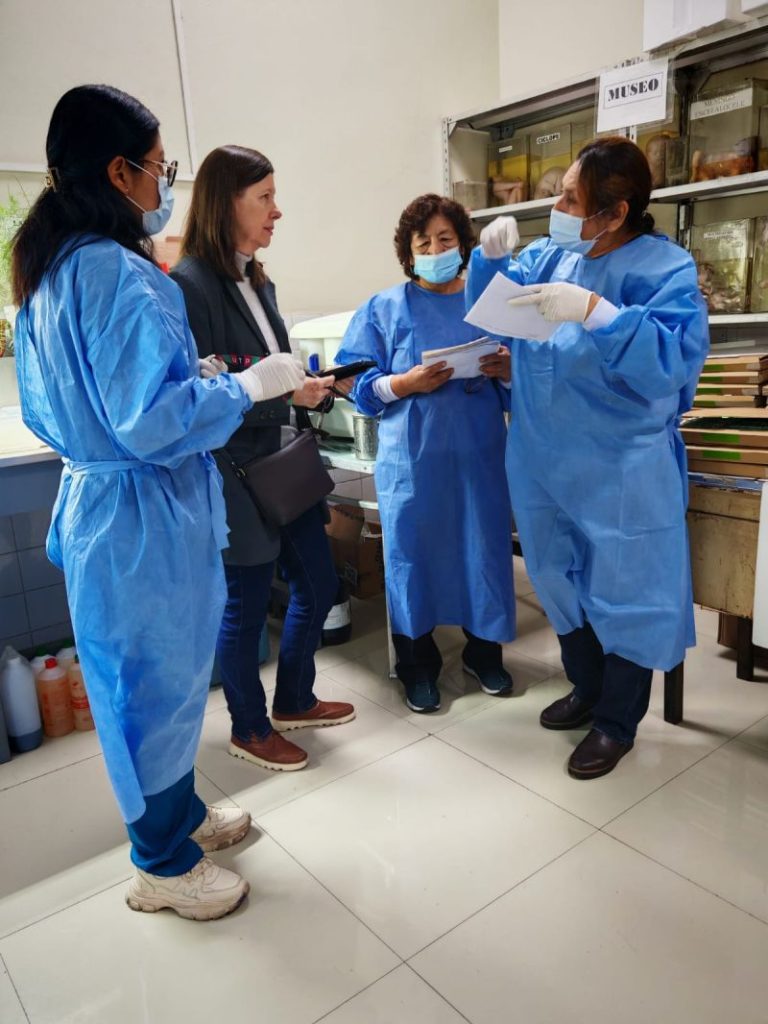
Before 2022, women in Asunción, Paraguay waited weeks for a pathology result after a suspected breast cancer diagnosis. The situation changed through a comprehensive system strengthening initiative in which C/Can partnered with Paraguay’s Ministry of Health and five major public institutions covering around 80% of breast cancer patients. Today, according to Dr Fátima Gómez, Director of the Pathology Laboratory at Paraguay’s National Direction of Pathology, diagnoses are delivered within 48 hours and full reports within three days. For a woman waiting to find out whether she has cancer, and what her treatment options are, that is not a marginal improvement. It can be the difference between early intervention and a diagnosis that comes too late.
This is what system change looks like when it works: moving away from single, siloed interventions towards coordinated action across the entire care pathway, samples tracked, results returned, care connected. Ensuring all building blocks of a health system function together.
Cancer is rising fastest in low- and middle-income countries (LMICs), where health systems are under the greatest pressure and resources are most constrained. The challenge is rarely a shortage of strategies but rather an implementation gap, where policies do not translate to care and interventions that reach patients.
This is where C/Can works. By working alongside cities in low-resource settings, bringing together governments, hospitals, clinicians, civil society and patients to understand the gaps in their current health system, and co-design solutions to strengthen them over time.
In 2025, across C/Can’s network, cities moved from designing programmes to implementing them and in several cases, handing them over entirely to national authorities. In Kigali, Rwanda, patient navigation programmes have been formally transferred to national authorities for continued scale-up. In Tbilisi, Georgia, cancer management guidelines and pathology quality standards developed in collaboration with C/Can have been approved and integrated into national health policy. In Arequipa, Peru, a mobile application to strengthen early cancer diagnosis, developed locally with C/Can, has been adopted by the Ministry of Health and rolled out to cities across the country. All of these milestones represent locally designed and owned solutions meant to build equitable and sustainable cancer care.
Since 2017, C/Can’s work has reached nearly 937,000 cancer patients at city level. But the national adoption of city-level solutions has extended that reach to an estimated 13.8 million patients. This shows how a system strengthening approach can reach beyond the primary focus of a city to surrounding areas.
To reach those patients, 3,400 healthcare professionals were trained, 15 clinical pathways were embedded into local systems, and 124 civil society organisations were engaged in shaping solutions that reflect the realities of their communities. In 2025 alone, C/Can expanded into Abidjan, launched gender equity consultations across three cities engaging over 110 stakeholders, and supported Abuja through a rigorous, evidence-based programme design process that resulted in a 10-year city cancer plan endorsed by local leadership and ready for implementation.
None of this is possible without strong, sustained partnerships. The C/Can model is built on the understanding that no single organisation, funder, or government can close the cancer care gap alone. What is needed is coordinated investment in the local systems that makes delivery possible, from workforce and governance to data, financing, and access to medicines.
The 2025 Annual Report documents a year of focus and consolidation in a tightening global financing landscape. It also demonstrates something more fundamental: that our model works, that it can be scaled, and that the cities which have walked this path together with us are now showing others the way.
If you believe that where you live and who you are should not determine the quality of cancer care you receive, we invite you to read the full report and to explore what partnership with C/Can could look like.