The world has made commitments to advance and strengthen cancer care. It has developed strategies, invested in innovation, and set global and national targets. Unfortunately, commitments alone do not deliver care. Unless countries can turn those strategies into functioning cancer care systems, patients will continue to fall through the gap between what is promised and what is delivered.
In low- and middle-income countries (LMICs), that gap is widest. The cancer burden is not only growing, it is outpacing health systems’ current capacity and readiness to respond. By 2050, more than half of new cancer cases and two-thirds of deaths are projected to occur in LMICs, currently the least equipped to act. The next frontier in global cancer care is not discovery, it is delivery.
Closing that gap requires health systems strengthening, a comprehensive approach to building the foundational capacities that enable health systems to deliver quality care equitably and sustainably. The World Health Organization (WHO) defines health systems strengthening around six core building blocks: service delivery, health workforce, health information systems, access to medicines and technologies, financing, and leadership and governance.
All six building blocks are interconnected, and in many LMICs, all six face significant pressure simultaneously. Progress in one enables progress in others, and gaps in one constrain the whole system. The workforce sits at the centre of that interdependency. Limited training in key diagnostic and treatment areas leads directly to misdiagnosis and delayed treatment. Specialised oncology training programmes, on the other hand, improve diagnostic accuracy and reduce delays in treatment initiation, translating system investment into better outcomes for patients. This is why capacity development is central to effective health systems strengthening: it is the mechanism through which health systems acquire not just resources, but the human capability to use them.
How C/Can Embeds Capacity Development Within City-Lead Health Systems Strengthening
At C/Can, capacity development is one of the core action areas through which we support cities to strengthen their health systems. We understand it as a complex, sustained process of development and change, one that focuses not only on individual skills, but on strengthening the abilities, processes, and resources that allow organisations and communities to thrive over time.
Together with local stakeholders, working through our City Engagement Process Framework (CEPF), we co-design solutions grounded in each city’s specific realities. Capacity development emerges directly from what the cities identify as an urgent gap and priority.
Cities are, in effect, the minimum viable unit of health systems transformation, an ecosystem where institutions, services, decision-makers, referral pathways, and communities can align around a shared plan for delivery. By working at this level, and by connecting local priorities to global expertise and international standards, C/Can supports strengthening the human capacity that turns health system investment into better outcomes for patients.
One key area where targeted capacity development delivers impact is diagnostics. Early, accurate diagnosis is the foundation of effective cancer care. Across C/Can’s cities, increased capacity building in diagnostics is an opportunity to build a skilled workforce that delivers faster, more accurate diagnoses and staging and shorter paths to treatment for patients who cannot afford delays.
In Practice: C/Can and the International Atomic Energy Agency (IAEA) Build Diagnostic Capacity Across Africa and Latin America
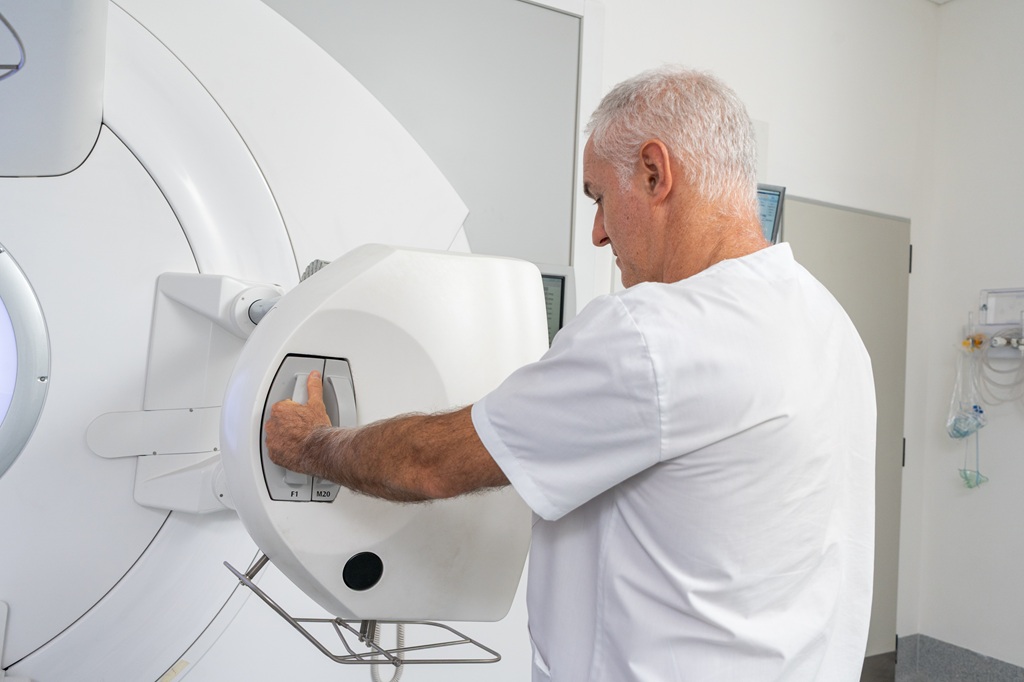
Breast cancer incidence is rising globally, and it is one of the most diagnosed cancers worldwide. Timely, accurate diagnosis is fundamental to improving patient outcomes and survival and medical imaging sits at the heart of that: from screening and early detection, to precise diagnosis and staging, image-guided biopsy, and patient follow-up. Mammography, often combined with ultrasound, remains the preferred imaging tool for breast cancer detection and diagnosis.
As imaging equipment reaches more facilities across LMICs (44 mammography units were acquired in the Latin American region in 2023-2024, enabling screening of 250,000 women per year) the opportunity to support the specialist skills needed to maximise investment is crucial.
In 2025, C/Can partnered with the IAEA to do exactly this, at scale, across multiple cities and regions.
The IAEA assists member states in the use of nuclear science and radiation medicine for diagnosing and treating non-communicable diseases, including cancer. It coordinates research, provides expertise and training, and sets safety guidelines internationally. It is one of the world’s leading sources of technical guidance on radiation medicine, and a technical partner for global-to-local knowledge capacity building C/Can supports.
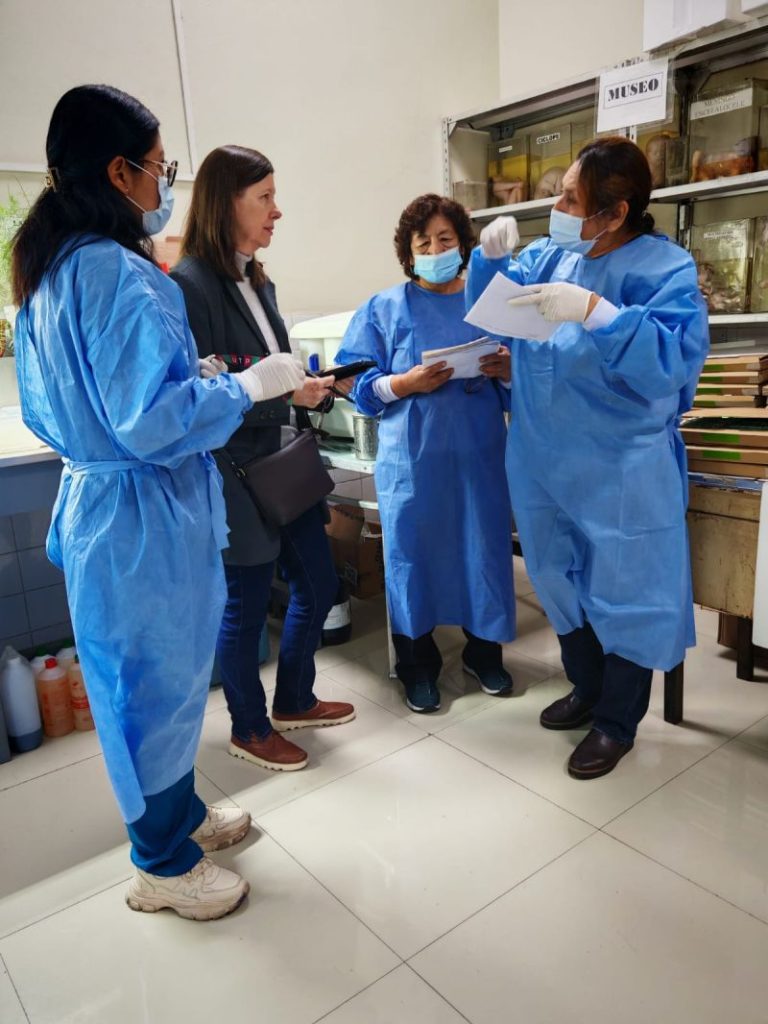
Across 2025, together with IAEA, we supported 22 diagnostic specialists from 6 C/Can cities across three training courses, spanning two regions. In August, 6 specialists from Rosario (Argentina), Cali (Colombia), Arequipa (Peru) and Concepciòn (Chile) participated in a course co-designed with UT MD Anderson Cancer Center. In November, 10 specialists from Nairobi (Kenya) joined the largest single-city cohort in the programme, reinforcing the city’s ongoing priorities in breast cancer diagnostics. In December, 6 specialists from Kumasi (Ghana) completed the programme.
The partnership has continued in 2026, with 5 radiologists from Cali (Colombia) and Leòn (Mexico) supported to participate in a further IAEA training programme held in Mexico City, deepening diagnostic capacity in cities already engaged in locally-led cancer solutions.
As C/Can and the IAEA continue collaboration, the focus remains on ensuring that investments in technology are matched by investments in people – including lasting diagnostic imaging and image-guided procedural skills, thereby improving treatment referrals and outcomes for patients across the world.
Miriam Mikhail Lette, M.D., Diagnostic Radiologist, IAEA
From Global Knowledge to Local Impact
Training courses and technical partnerships are essential to building the long-term capacity of professionals who sustain health systems and quality care. The 27 professionals who have participated in these IAEA courses returned to cities with active cancer care programmes, where their new skills feed directly into locally co-designed solutions and spread further as they train others.
At C/Can, this is the work we are committed to: connecting global expertise to city-level action to build equitable, accessible cancer care from the ground up.
By joining forces with partners like the IAEA, we aim to ensure that our technical assistance is of excellence and well aligned, non-duplicative and maximises resources in international cooperation.
Thet Ko Aung, Senior Manager, Technical Cooperation, C/Can
C/Can would especially like to thank Siemens Healthineers for their valuable support in advancing these capacity development initiatives.