Across the world, the cancer care a woman receives is shaped not only by biology or by the strength of her local health system, but by gender. Whether her symptoms are taken seriously, whether she can reach a clinic, whether she holds decision-making power over her own health, and which roles women are able to take on in the health workforce all influence the care she receives. In low- and middle-income countries (LMICs), where access to quality cancer care is already harder to come by, these barriers fall hardest on women.
This was the central message of The Lancet Commission on Women, Power and Cancer, published in 2023, which set out both the scale of these disparities and a path towards addressing them. At City Cancer Challenge (C/Can), that message became a call to action. Rather than treating women and cancer as a separate issue, C/Can set out to bring a gender lens into the heart of its work: the way it helps cities strengthen their cancer care systems. That response, developed together with women health leaders from across C/Can cities (CGGG – C/Can’s Global Gender Group), became C/Can’s Women and Health Strategy*.
That strategy is already taking shape on the ground. Throughout 2025, consultations in three cities, León (Mexico), Nairobi (Kenya), and Tbilisi (Georgia), brought local stakeholders together to identify the gender-related gaps in their cancer care systems and the priorities for change. These consultations also surfaced a clear need to develop capacity locally, so that leaders are equipped to translate those priorities into action. The Masterclass was designed as a foundational capacity development intervention to meet exactly that need. This is where a new collaboration with the Union for International Cancer Control (UICC) comes in.
From a Global Masterclass to a City-Focused Cohort
In 2025, UICC, together with the McCabe Centre for Law, Global Focus on Cancer (GFC), and Cancer and members of the Lancet Commission, developed an online masterclass exploring how gender and power shape cancer prevention, diagnosis, treatment and care. C/Can was invited to contribute to the development of Module 6, sharing how it has turned the Commission’s recommendations into practical action in its cities.
When UICC worked together with the McCabe Centre for Law and Cancer, Global Focus on Cancer and members of the Commission in 2025 to translate the Commission’s report into online learning resources, the aim was to help ensure that its findings and recommendations were put into action by a wider audience of cancer professionals. This collaboration with City Cancer Challenge (C/Can), offering the course to stakeholders from three C/Can cities piloting efforts to develop gender-responsive cancer care systems, is a perfect example of that.
Alessandro Di Capua, Senior Manager, Union for International Cancer Control (UICC)
In 2026, a second masterclass was designed specifically for the three C/Can cities already advancing this work. The aim is simple: to bring more of the people who shape cancer care in León, Nairobi and Tbilisi into a shared conversation about women and cancer, so that the priorities identified in each city are understood and supported by a wider group of local actors.
Lasting change in cancer care requires more than evidence alone. It requires a shared understanding among the people who shape health systems every day. Through this Masterclass, we are building that foundation across León, Nairobi, and Tbilisi, equipping local leaders with a common language, shared tools, and new connections that can evolve into communities of practice on gender-responsive cancer control.
Dr Meritxell Mallafré-Larrosa, Technical Manager and Research Lead, City Cancer Challenge
Starting With a Shared Foundation
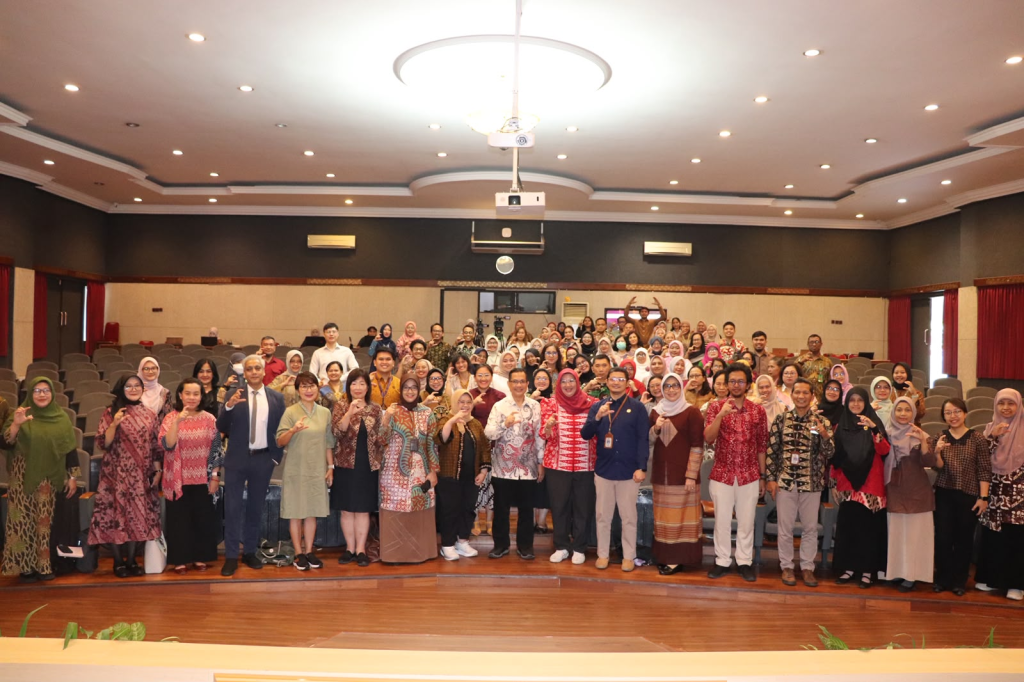
The second masterclass took place from May to June 2026 and was attended by over 100 participants across the three cities. Aimed first at civil society organisations and allied stakeholders within cancer care, the groups often closest to the women and communities a cancer care system is meant to serve, alongside clinicians, policymakers and others whose decisions shape how care is delivered. Participants were identified together with local partners and City Managers in each city, so that each group reflected its own community.
The masterclass was both a starting point and a technical deep-dive. Its purpose was to build a shared understanding of how gender and power affect cancer care, and a common language to talk about it, so that local stakeholders can set priorities together and recognise the same challenges when they see them. Lasting change in a health system depends on enough people sharing that understanding.
This course was highly informative, engaging, and practical. It provided valuable insights into advocacy, leadership, and effective collaboration with decision-makers – essential elements for driving meaningful improvements in cancer care and shaping health policy in our country. I am sincerely grateful to the C/Can–UICC team for creating such an inspiring and empowering learning opportunity.
Lolita Abramova, Vice President, Caucasus Cancer Society Hope, Tbilisi, Georgia
Listening, Locally and Across Cities
As participants moved through the masterclass together, connections grew, within each city and between them, across sectors and organisations, laying the foundations for future communities of practice on gender-responsive cancer control. As a result, people working on gender and cancer care are no longer doing so in isolation. These connections are how a shared diagnosis becomes a shared action, and how an idea that works in one city can travel to another. The 2026 cohort lays that groundwork, and a possible cross-city cohort in 2027 would build on what it teaches, bringing in more cities and more partners.
The master class made me realise that, as participants, even though we came from different cities, different organizations, and had different roles, we all cared deeply about the same thing, which is making cancer care more equitable. We were all ready to learn from each other. That feeling of shared purpose reminded me that meaningful change is built through relationships and honest conversations.
Prisca Githuka, Executive Director, Pink Hearts Cancer Support Foundation, Nairobi, Kenya.
I found it very interesting that, despite our diverse contexts, cultures, and levels of development, we share the same realities when it comes to the challenges posed by cancer. It was inspiring to see how networks are growing stronger as they work toward a common goal: identifying the factors that will help us develop effective public policies to change cancer outcomes in all aspects—medical, social, family, and occupational—and to break down the barriers that countless women continue to face if they become ill
Dr Lourdes Alejandra Pérez Torres, Dirección de Salud Municipal, León, Mexico
Local Capacity, Global Knowledge
Global recommendations change lives when they reach the people closest to care and are implemented in reality. By turning the Lancet Commission’s findings into a practical course rooted in the realities of León, Tbilisi and Nairobi, C/Can and UICC are helping close the distance between a global call to action and the daily reality of cancer care in a community.
Bringing a gender lens to cancer care is not a separate task from strengthening health systems. When those systems work better for women, they become stronger, fairer and more resilient for everyone, in all their diversities. This masterclass is one step on that path, and an invitation to the cities and partners ready to take it.
One thing this masterclass really impacted me was how I think about gender lens in cancer care. I now see it as a way of asking better questions like who is being left out, whose experiences are we missing, and what would care look like if we truly designed it around the realities of different people? That’s a perspective I will carry with me and apply in my work.
Prisca Githuka, Executive Director, Pink Hearts Cancer Support Foundation, Nairobi, Kenya.
*The implementation of C/Can’s Women and Health Strategy is made possible thanks to the support of Amgen, Global Focus on Cancer (a US charitable organisation supported by donations from Eli Lilly and Company), MSD, Roche, and Siemens Healthineers.