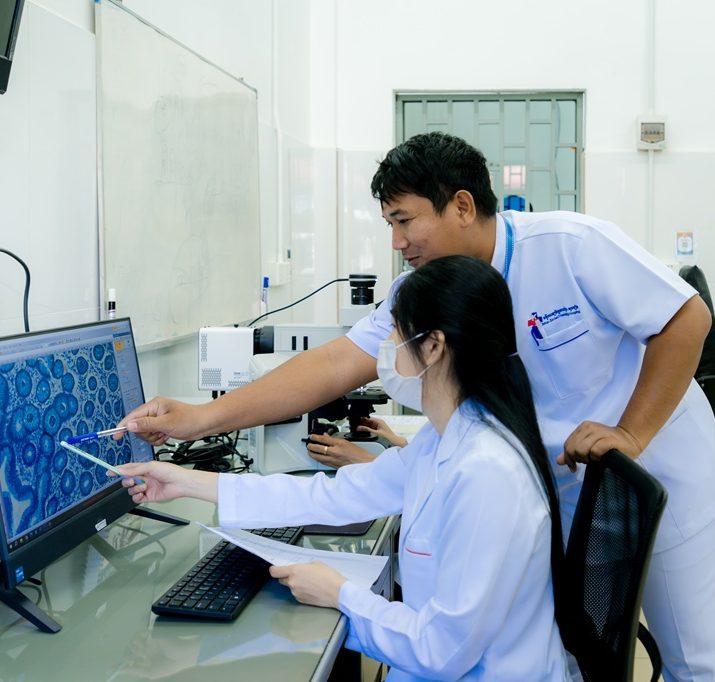
Cancer is one of the defining global health challenges we face, and nowhere is that challenge more acute than across Low-and-Middle Income Countries (LMICs). Today, LMICs bear 70% of the global cancer burden, yet account for a fraction of global investment in cancer care. Patients in these settings are less likely to receive a diagnosis, more likely to be diagnosed late, less likely to access the treatment they need, and far less likely to survive. These barriers cannot be attributed to just one failure, but to a system-wide shortcoming: gaps in early detection, diagnostic capacity, pathology services, workforce training, supply chains, financing, and data, each making the next step in the cancer care journey harder to reach.
For nearly a decade, City Cancer Challenge (C/Can) has worked at the city level across 19 cities in LMICS to strengthen health systems in order to make cancer care accessible, equitable and effective in real-world contexts. The starting point is always the same: the right treatment can only reach the right patient when the system between them is strong enough to connect the dots that lead to coordinated care.
With advances in cancer care, such as precision oncology, health system readiness across LMICs should be a priority. Without it, these innovations will remain out of reach for the patients who need them most, widening the global cancer divide rather than closing it.
The Science Exists but Health Systems are Not Ready
Biomarker-driven therapies now cover a significant number of advanced cancer types. Precision oncology matches treatment to the individual patient (using genomic, proteomic and molecular testing of biopsy samples alongside clinical data) rather than applying the same protocol to everyone with the same diagnosis. This is changing what is possible in cancer care. Where it has been put into practice, the results are meaningful: better survival through targeted therapies, fewer adverse drug reactions, and faster diagnosis for patients with complex or rare cancers. Treatment outcomes have never been more promising.
But science does not work in isolation. It depends entirely on what is already in place within a health system; reliable biomarker testing, laboratories that meet quality standards, pathologists trained in molecular techniques, clinicians who can interpret and act on data and financing that makes treatment accessible to the patients who need it. In high-income countries, much of this already exists. In most LMICs, the foundational prerequisites remain critically underdeveloped, with limited pathology infrastructure and quality gaps in the pre-analytical phase, insufficient workforce capacity, and inconsistent access to essential cancer medicines to name but a few areas requiring support.
Without those foundations, even the most advanced therapy cannot reach the patient it was designed for. International guidance is clear on what needs to change. But without deliberate, local-level action, inequities risk hardening into a permanent, two-tiered system for cancer care, one where precision oncology transforms outcomes in high-income settings, while low-resource settings are left further behind.
A Global Policy Moment: the WHA79 Resolution
Last week, at the 79th World Health Assembly in Geneva, Member States endorsed the resolution, Precision Medicine: A Path Towards Targeted, Personalised and Equitable Care, the first international framework explicitly linking precision medicine to universal health coverage. Proposed by a coalition of sixteen countries spanning Africa, Asia, Latin America, and the Middle East, the resolution represents a call for better preparation and implementation of precision medicine across the globe, including precision oncology.
The resolution calls on Member States to invest in laboratory and diagnostic infrastructure, build workforce capacity, establish data governance frameworks, and pursue sustainable financing. It also requests WHO to develop a country maturity model, a phased framework to help governments assess health system readiness and chart a realistic implementation pathway. A global precision medicine strategy is requested by 2029, with a first progress report to the World Health Assembly in 2027.
That window is where the real work begins. Global frameworks are only as strong as the city- and country-level evidence informing them. And that evidence does not yet exist at the scale or specificity the field needs. Understanding the barriers is not the same as dismantling them. Health system constraints, including limited pathology infrastructure, inadequate diagnostic capacity, and inconsistent access to essential cancer medicines, require deliberate, local-level action to generate the quality evidence needed to develop actionable recommendations that are tailored to local realities whilst scalable to global learnings.
Building the evidence: C/Can and IQN Path
This is precisely the gap that C/Can and IQN Path are working together to address.
In December 2025, C/Can announced a strategic partnership with IQN Path. The collaboration brings together IQN Path’s scientific expertise and global convening capacity with C/Can’s established trust with local stakeholders, city governance partnerships, and implementation experience across health systems, laboratories, and policymakers in LMICs.
The partnership is grounded in a shared conviction: precision oncology depends on precision diagnosis. Without reliable biomarker testing, strong pathology services, and quality laboratory standards, health systems cannot safely deliver advanced oncology treatments. The two organisations aim to actively work together on assessing needs and gaps at the local level, strengthening technical knowledge exchange, and building local capacities with the aim of improving access to biomarker testing so that patients are accurately identified for appropriate cancer treatment. Across an initial set of focus cities, the initiative will identify critical gaps, develop educational tools tailored to local needs, based on the existing robust expertise from IQN Path, and create a network of experts to deliver localised training. All learnings will be shared to support broader knowledge dissemination and locally-led evidence generation to support global frameworks.
The WHO resolution requests a progress report by 2027 and a full global strategy by 2029. The learnings generated through C/Can and IQN Path’s initiative will inform that very process, ensuring that LMICs realities support in shaping the global agenda.
Looking Ahead
Precision oncology offers a genuine opportunity to transform cancer outcomes for patients everywhere but only if the health systems needed to deliver it are built alongside the science. Global recommendations, including the resolution adopted at WHA79, set an important direction. Translating that direction into tangible change requires deliberate, local-level action grounded in the realities of the cities and health systems where care is actually delivered. This is the work that C/Can and IQN Path are committed to, ensuring that as the global precision medicine agenda takes shape, LMIC cities are not just its intended beneficiaries, but active contributors to defining what it looks like in practice. Join us to ensure precision oncology benefits everyone, everywhere no matter where they live.