Abuja, May 5, 2026 – Nigeria’s Federal Capital Territory is accelerating its cancer care transformation with the launch of 9 locally-designed projects developed through a community-driven process under the City Cancer Challenge (C/Can) initiative.
Building a Cancer Care System Rooted in Local Reality
Cancer is one of Nigeria’s most pressing public health challenges, yet access to quality care remains deeply unequal. In Abuja, that is beginning to change. Endorsed by the Federal Ministry of Health and Social Welfare, the Federal Capital Territory Administration, the National Institute for Cancer Research and Treatment, local institutions and C/Can, the 9 projects launched today are the product of years of rigorous evidence-gathering, cross-sector collaboration, and genuine community participation.
These 9 projects reflect our collective voices and needs, and we are committed to delivering lasting impact,
said Dr. Uchechukwu Emmanuel Nwokwu, National Coordinator, National Cancer Control Programme and Nuclear Medicine, Federal Ministry of Health and Social Welfare.
A Coalition Built for the Long Term
Abuja’s journey began in 2023, when the Federal Ministry of Health and Social Welfare, the Federal Capital Territory Administration, the Clinton Health Access Initiative, Medicaid Cancer Foundation, and C/Can signed a Memorandum of Understanding, establishing the cross-sector foundation that has driven the city’s programme ever since. Following C/Can’s City Engagement Process Framework (CEPF), stakeholders came together to map Abuja’s oncology landscape. In 2025, 13 health institutions, 66 healthcare professionals, 16 civil society organisations, and 542 patients contributed data, expertise, and lived experience to one of the most extensive stakeholder engagement processes undertaken in cancer care in the region.
The strength of what we have achieved in Abuja lies in the breadth of those who came to the table. From the very beginning, this has been a city-owned process, and these 9 projects are proof that when local leaders, health professionals, and patients work together toward a common goal, meaningful change is within reach,
said Dr. Adedolapo Fasawe, C/Can’s CEC Chair and Mandate Secretary for Health and Environment Secretariat, Federal Capital Territory, Abuja.
From Evidence to Targeted Action
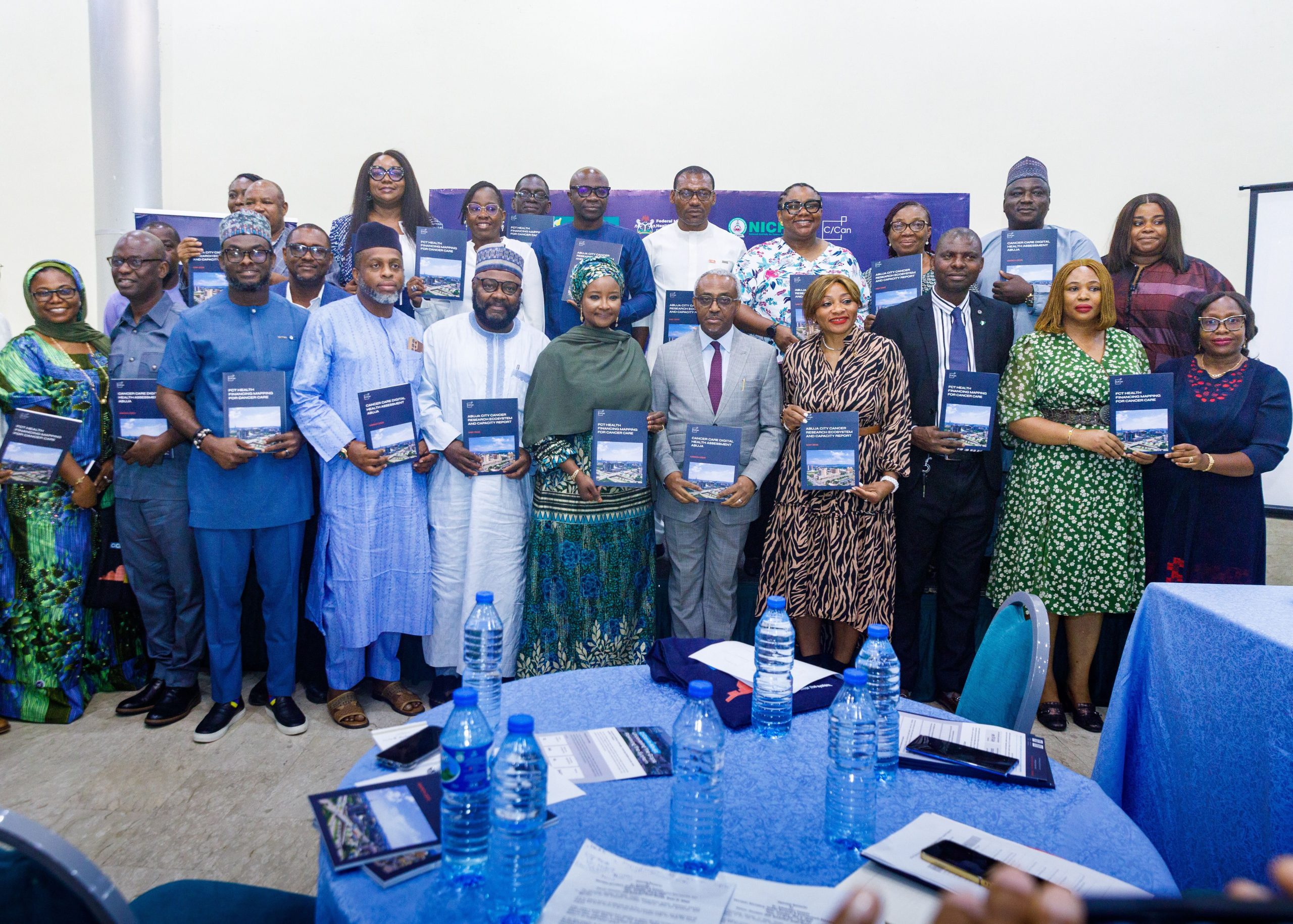
The result was four foundational reports, covering situational analysis, research capacity, digital health, and health financing, that together map the current state of Abuja’s cancer care system and where it needs to go. Together, these reports informed a collaborative prioritisation process, through which local stakeholders co-developed 9 tailored project plans addressing the city’s most critical gaps across the continuum of care.
Abuja has demonstrated that when governments and partners commit early and commit together, their results are transformative. The depth of engagement we have seen here, across institutions, communities, and patient groups, underscores the importance of Nigeria’s scale in driving momentum for cancer care reform across West Africa,
said Sophie Bussmann-Kemdjo, Director for Africa & Europe, C/Can.
A Launch with Regional Implications
The official launch event brought together representatives from across Abuja’s health ecosystem, government ministries, civil society, healthcare institutions, international partners and patient advocates. Each of the 9 projects was presented with a focus on implementation, accountability, and long-term sustainability, reflecting the collective ownership that has defined Abuja’s process from the start.
Nigeria carries a significant share of Africa’s cancer burden, and Abuja is now taking concrete, locally-owned action to change that. These 9 projects represent not just a plan, they represent a city that has done the work, built the evidence, and is ready to deliver
said Isabel Mestres, CEO, C/Can.
As one of C/Can’s core cities in West Africa, Abuja’s progress signals a broader shift, demonstrating that city-led, locally-owned action can drive systemic change in care across the region and beyond.
Looking Ahead: Turning Plans into Impact
With project plans approved and political endorsement secured, Abuja now moves into implementation. Led by the City Executive Committee, the city will execute projects, track impact, and build the local capacity needed to sustain and scale improvements in cancer care for years to come.
C/Can’s City Engagement Process in Abuja, is made possible thanks to the support of a coalition of global funding partners. C/Can wants to thank in particular Bristol-Myers Squibb, MSD and Roche for their generous contributions.