Many of the medicines needed to treat cancer exist and are defined as essential in all healthcare systems. Yet they do not consistently reach the facilities where patients receive their intended care, too often simply not there when treatment needs to start.
Bridging the Gap Between Listing and Access
Access to cancer medicines is highly uneven across health systems and geographies. Since 1977, the World Health Organization’s (WHO) Model List of Essential Medicines (EML) has guided countries on the medicines every health system should be able to provide, and its cancer chapter has grown from six listings to more than sixty medicines today, reflecting the growing weight of cancer in global health. Countries are recommended to adapt this into their own national essential medicines lists, which in turn shape what health systems prioritize to procure, fund and include in insurance packages. And in most countries, cancer care itself is delivered by a mix of public and private providers, whose access to the same medicines can look very different.
Having a medicine on a national list is only the first step in a long journey. Before it reaches a hospital pharmacy, a cancer medicine has to move through budgets, procurement processes, supply chains, distribution networks and the purchasing arrangements of individual institutions. Sometimes a breakdown along that journey delays a medicine. Sometimes the medicine is simply not available at all. And because cancer treatment follows strict protocols and timelines, a missing medicine is not an inconvenience. It can change the course of a person’s disease.
A national medicines list, in other words, is a commitment rather than a guarantee, and the difference between the two is hardest to see precisely where it matters most. Most monitoring of medicine availability happens at the national level, using averages that hide the differences between one hospital and the next. Two facilities in the same city can have completely different levels of access to the same medicine, and national data will not show it.
Understanding the Actual Therapeutic Options Available
Cancer medicines are mainly administered in a hospital setting, so the hospital is where the supply of these medicines either holds or breaks down, and the natural place to measure availability. Through their Needs Assessment, several C/Can Cities have identified irregular supply of cancer medicines as a priority need to address. To respond to that gap, a better understanding was required of which medicines are available or unavailable, at which facilities, how often, and why. Yet no existing measurement tool was built for this task: none could distinguish a medicine that is chronically absent from a facility’s inventory from one that is temporarily out of stock, a distinction that calls for entirely different responses, and none combined an oncology-specific approach with the views of multiple respondents within the same facility.
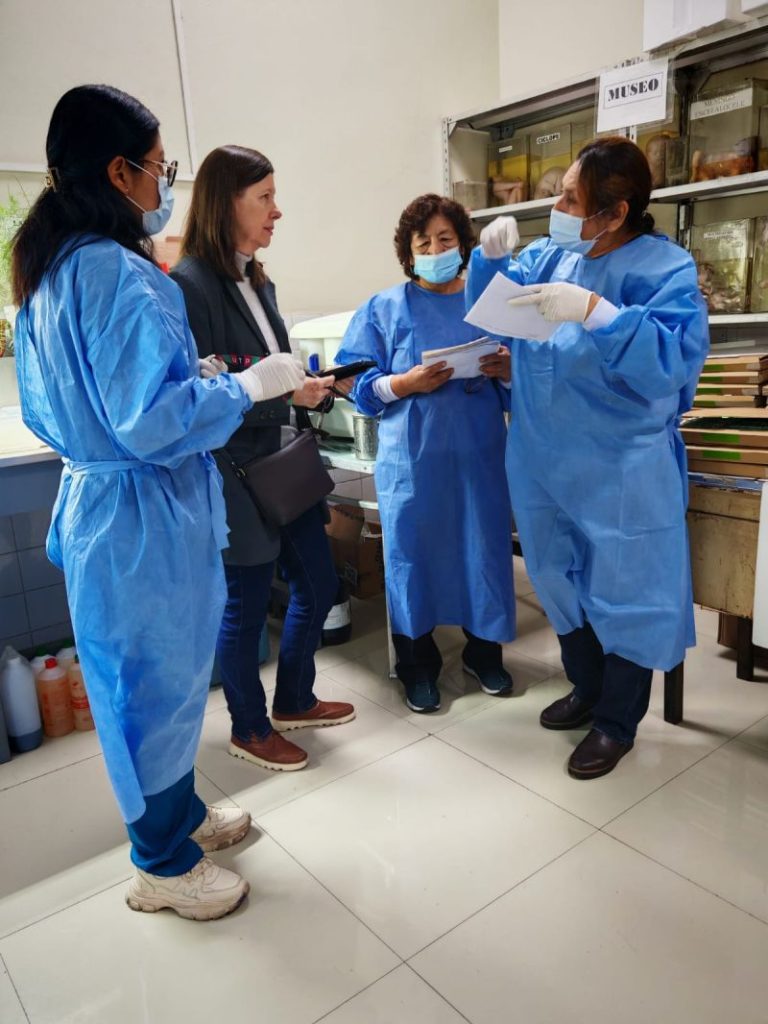
In response, C/Can worked with local clinicians, pharmacists, hospital administrators and technical partners to develop the Oncology Medicines Availability Assessment Instrument. It builds on internationally validated methods for measuring medicine availability, including those of the WHO and the European Society for Medical Oncology, adapted to cancer care and to each city’s context. The approach combines an online survey of health professionals across a city’s main cancer care providers with in-depth qualitative work, such as facility visits and interviews with key stakeholders. The survey shows the patterns; the qualitative work uncovers the structural reasons behind them, which the numbers alone cannot reveal.
The Oncology Medicines Availability Assessment is unique because it captures a comprehensive, citywide picture of what therapeutic options are truly available where they matter the most, moving beyond what is merely listed or reimbursed. By generating this evidence, we help cities design prioritised context-specific interventions that place equity at the very centre of access to cancer medicines.
Diogo Neves, Health Systems and Policy Advisor, C/Can
Putting the Tool to Work: The Case of Phnom Penh and Nairobi
The instrument was first used in Phnom Penh, Cambodia and Nairobi, Kenya, two cities where teams had identified access to cancer medicines as a challenge to address, though for different reasons, and the two countries illustrate two very different versions of the problem. Cambodia’s national list includes only 13 cancer medicines, among the lowest coverage worldwide, and the team in Phnom Penh saw this limited oncology coverage as the primary barrier, seeking facility-level evidence to support advocacy for reform of the list. Kenya’s list includes almost all of the WHO’s essential cancer medicines, yet published studies have documented frequent stockouts at its facilities, and the team in Nairobi identified supply chain performance as the central concern, seeking evidence to inform targeted strengthening. One system’s challenge starts with the list itself; the other begins after it.
Access to cancer medicines is not only about what is included on a national list, but what is actually available to patients when and where they need treatment. There is no single solution to improving access to cancer medicines. The right response begins with understanding where the gaps are and why they exist.
Dr Mlis Ratha, Project Coordinator for Systemic Treatment.
In each city, the assessment covered the major providers of systemic cancer therapy, pairing the online survey with an expert mission and stakeholder workshop in Phnom Penh and a structured virtual consultation with facility and national-level stakeholders in Nairobi.
The findings from both cities challenged a common assumption. The problem was not a citywide shortage of medicines. It was variation between facilities in the same city, and that variation had causes that could be traced. Availability patterns reflected how institutions are structured and financed: procurement arrangements, degrees of institutional autonomy, budget constraints, the design of insurance coverage, and differences between public and private providers all shaped which medicines were reliably available, and where. This matters at the population level, because in both cities the majority of people receiving systemic cancer therapy rely on public institutions, so availability constraints at those facilities carry disproportionate weight.
The Assessment provided clear evidence that there is disparity within the city of cancer medication availability. By highlighting the barriers, the survey will enable us to advocate with the necessary policy makers and implementers to ensure that all cancer patients, regardless of which facility they go to, can access cancer medication because we have strengthened the supply chain, procurement process and financing of cancer care.
Dr Sitna Ali Mwanzi, Head of Department, Oncology Centre, Kenyatta National Hospital, Nairobi, Kenya.
This is exactly the kind of insight that matters for health systems strengthening, because it points to different levers in different systems. The same tool, applied in two cities, produced two distinct roadmaps, because the systems behind the gaps are different.
From Evidence to Action, Reaching Beyond a Single City
This is what the instrument is ultimately for. Any C/Can city that has identified problems with the supply of cancer medicines can now apply it through its city programme, generate its own evidence base, and pinpoint where in the system its medicines stop moving. That precision changes the conversation with decision-makers: instead of a general call for better access, cities can make a specific, evidence-backed case for a specific reform.
The first two assessments are also shaping how the method evolves. The experience showed that structured expert visits, with face-to-face interviews and direct observation at facilities, produce a depth of system understanding that self-administered surveys cannot replicate, and future assessment cycles will build on that learning. Even the question of who to ask proved instructive: pharmacists assessed a broader range of medicines than clinicians, a practical lesson for designing the next round.
Reliable access to cancer medicines will not be solved by any single policy reform. It should start first with a clear and common picture of what is available at the level where care is delivered. That is what this instrument offers cities: a tool to assess availability in their own health systems, and data they can act on. Its findings feed directly into the design of city programmes that C/Can develops through technical cooperation, so that the evidence a city generates becomes the foundation of the response it builds. Seeing the problem clearly is the first step. Acting on it, together, is where the work continues.
The Oncology Medicines Availability Assessment Instrument has been developed as part of the Readiness for Access to Oncology Medicines programme. C/Can would like to thank Amgen Inc. for the support brought to the implementation of this programme.