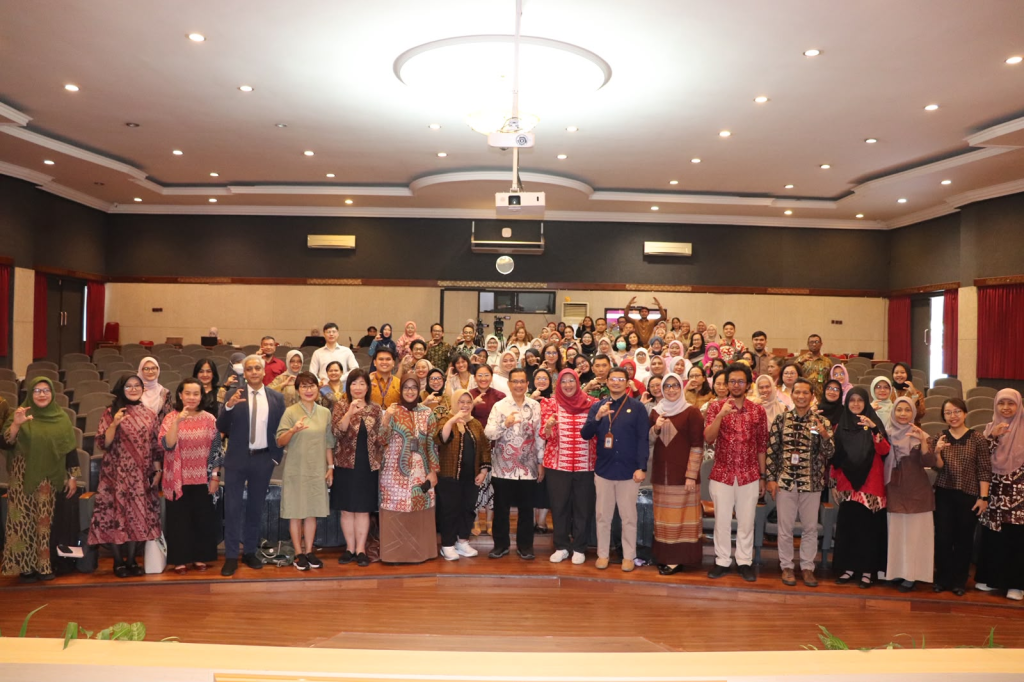
On World Cancer Day, Indonesia gathered in Jakarta to launch its Breast Cancer National Action Plan (BCNAP) 2025–2034. The ten-year roadmap covers the full continuum of care, from prevention and early detection to diagnosis, treatment and support. It sits alongside the National Cancer Control Plan 2024–2034 and the National Cervical Cancer Elimination Plan 2023–2030.
The need is pressing. According to GLOBOCAN 2024 estimates from the International Agency for Research on Cancer (IARC), breast cancer is the most commonly diagnosed cancer in Indonesia, with 93,236 new cases, nearly one in five of all cancers diagnosed in the country. It is also the second leading cause of cancer death, with 38,012 deaths.
City Cancer Challenge (C/Can) and Dharmais Cancer Hospital (Indonesia’s National Cancer Center) have signed a memorandum of understanding (MoU) to turn the national plan into a Breast Cancer Action Plan designed for Jakarta’s health system. The programme has the backing of the Ministry of Health and the support of Roche Indonesia.
A Blueprint that Travels
Jakarta is the second Indonesian city to take this path under C/Can Horizon. In 2025, Yogyakarta became the country’s first model city for a data-driven, stakeholder-led approach to breast cancer care, and its experience set the initial blueprint.
That blueprint now moves to a new setting, carrying far more than one city’s experience. Through C/Can Horizon, Jakarta draws on almost a decade of implementation knowledge and technical expertise built alongside C/Can’s Core Cities since 2017. Added to this are the tools, baseline models and practical lessons first applied together in Yogyakarta. Jakarta’s teams will adapt this experience to their own context and, in turn, refine the blueprint further.
With every Horizon city that takes part, Indonesia builds a stronger body of evidence on what it takes for national breast cancer priorities to become better-coordinated services in different health systems across the country.
Yogyakarta showed what is possible when national direction and local leadership move together. Jakarta brings a new scale and a new set of institutions to that work. What we learn here will strengthen the blueprint for every Indonesian city that follows.
Chika Kitajima, Regional Director for Asia, C/Can.
From National Actions to Local Delivery
The BCNAP sets the direction for the country. It distributes actions across ministries, government agencies, professional bodies and industry, with national cancer centres and health facilities leading many of them.
Under the MoU, Dharmais leads the work in Jakarta as the programme’s local implementation partner, with C/Can supporting delivery. Together, they will structure national actions into coherent local programmes, set clear priorities and strengthen coordination between institutions.
In a city as large and complex as Jakarta, coordination between multiple stakeholders can make the difference. When they plan together, the health system can become more connected, and shared priorities turn actions into a programme the city can deliver.
As Indonesia’s National Cancer Center, Dharmais Cancer Hospital plays a strategic role in bridging national policy with the implementation of cancer care. Through our collaboration with C/Can, we hope this program will strengthen coordination among stakeholders, align priorities, and advance more comprehensive and integrated breast cancer services. These efforts are expected not only to benefit communities in Jakarta but also to provide valuable lessons for strengthening breast cancer care across Indonesia.
Dr Eniarti, M.Sc., Sp.KJ., M.M.R., QHIA, President Director, Dharmais Cancer Hospital
C/Can Horizon in Jakarta
C/Can Horizon adapts implementation pathways proven in C/Can’s Core Cities to local needs and readiness. In Jakarta, the work aligns with the targets of the WHO Global Breast Cancer Initiative (GBCI), including its goal of reducing breast cancer mortality by 2.5% every year, and draws on its global frameworks. Jakarta’s own institutions lead the process, and C/Can contributes implementation know-how and technical expertise built across its global network of cities.
Over six months, Jakarta’s partners will:
- Map the city’s breast cancer ecosystem, identifying the institutions and leaders who shape care across Jakarta.
- Set up local governance, with a City Executive Committee to steer and endorse the work, and a multisectoral Breast Cancer Working Group organised around two priorities: prompt diagnosis and comprehensive breast cancer management.
- Build the evidence base, assessing diagnostic quality, workforce capacity, infrastructure and referral pathways across selected facilities, captured in a Situation Analysis Report.
- Co-design the plan, bringing 40 to 70 healthcare professionals and stakeholders together in a two-day workshop to draft Jakarta’s Breast Cancer Action Plan.
- Prepare for delivery, translating endorsed priorities into four to five project concept notes with clear objectives, roadmaps and deliverables.
Starting in Cities, Reaching Further
Two cities, one national plan and a shared commitment to closing the cancer care implementation gap: the distance between national and global commitments and the care delivered on the ground. Cities are where that gap is most visible, and where it can be closed first. When hospitals, academic institutions and health authorities in one city work as a coordinated system, that experience ripples outward, informing neighbouring cities and provinces, shaping how the BCNAP reaches every part of the country and offering lessons for the wider region. With Yogyakarta and now Jakarta, Indonesia is building that momentum city by city.
The Yogyakarta breast cancer initiative demonstrates the value of a public-private partnership driven by a commitment to improving outcomes for breast cancer patients through a data-driven, city-led project. It exemplifies a comprehensive and coordinated breast cancer care approach that incorporates innovation. The expansion to Jakarta underscores the solidity of this approach in improving health outcomes for every Indonesian woman.
Sanaa Sayagh, President Director, Roche Indonesia
The collaboration between the Ministry of Health, Dharmais Cancer Hospital, C/Can and Roche Indonesia reflects a common conviction: equitable and quality cancer care should be available to everyone, everywhere.